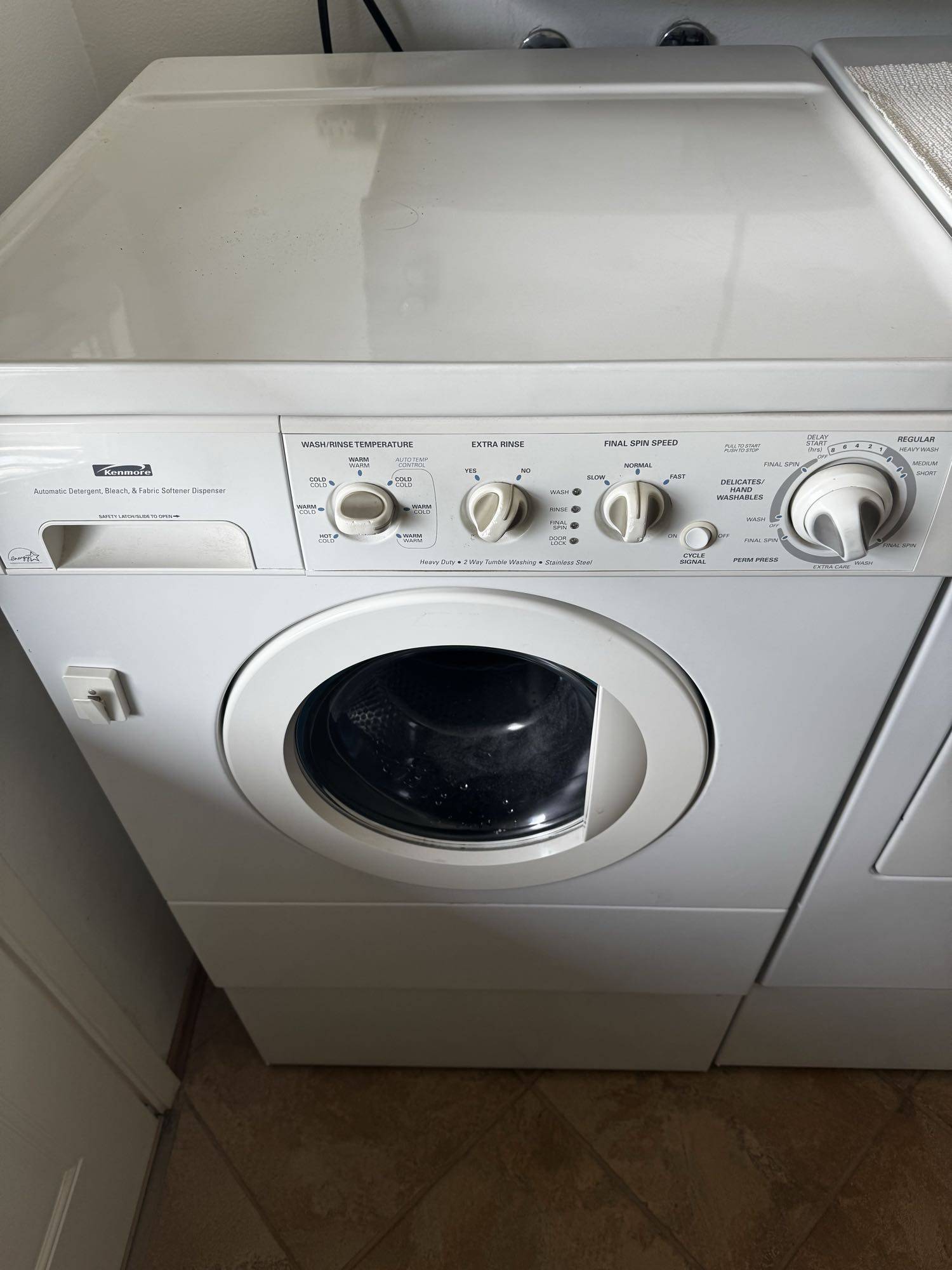
A GE washing machine that makes a clicking noise but refuses to start can be frustrating, especially when the display appears normal and the washer seems to respond to your commands. The clicking sound often means that the appliance is receiving a start signal but cannot complete the next step in the cycle. Several components can cause this symptom, including the drive motor, electronic control board, lid or door lock, wiring, and power-related components.
One of the first things to check is whether the washer is receiving stable electrical power. A loose plug, damaged outlet, tripped breaker, or electrical problem can prevent the motor and other components from operating correctly. If the washer turns on but only produces a click when you press Start, the issue is more likely related to an internal component.
The motor is one possible source of the problem. The drive motor is responsible for turning the washer drum or agitator during the wash and spin portions of the cycle. If the motor has an internal electrical failure, worn components, or another mechanical problem, the control system may attempt to activate it without the motor actually running. The result can be a clicking sound followed by silence.
A motor problem can sometimes be accompanied by other symptoms. You may notice that the washer previously had trouble completing spin cycles, made unusual humming or buzzing sounds, or stopped working after becoming heavily loaded. In some cases, the motor may overheat and temporarily stop operating. However, repeated clicking and failure to start generally require proper testing rather than simply replacing the motor.
The electronic control board is another important component to consider. The control board coordinates many washer functions, including sending power to the motor, managing the cycle sequence, monitoring safety switches, and responding to user commands. If a relay or another component on the board fails, the washer may click as the board attempts to activate a circuit but fails to provide the correct output.
Control board problems can be difficult to diagnose because the washer may still appear to work normally. The display can light up, buttons can respond, and cycle selections can be available even when the board has developed a fault. This is why replacing the control board based only on a clicking sound is not always the right approach. A technician should test the relevant circuits and determine whether the board is actually sending the required voltage to the motor and other components.
The lid or door lock assembly should also be inspected. Many GE washing machines will not begin operation unless the control system confirms that the lid or door is securely closed. A defective lock, damaged switch, or wiring issue can prevent the washer from starting. Depending on the model, you may hear a click when the machine attempts to engage the lock, but the cycle will not proceed if the expected signal is not received.
Another possible cause is damaged or loose wiring. The motor, control board, lock assembly, and other components communicate through wiring harnesses and connectors. Vibration from regular washing cycles can contribute to loose connections, while damaged insulation or a failed connector can interrupt an electrical circuit. A technician can inspect these connections and test continuity to identify an electrical fault.
The washer’s start capacitor or related motor-control components may also need attention, depending on the specific GE model. These components help the motor start and operate correctly. When one fails, the washer may make a clicking or humming noise without successfully starting the motor.
Before scheduling a repair, homeowners can perform a few basic checks. Make sure the washer is connected directly to a functioning outlet and that the breaker has not tripped. Confirm that the lid or door closes completely and that no clothing is preventing it from engaging properly. You can also disconnect the washer from power for several minutes and reconnect it to see whether the control system resets.
If the clicking continues, avoid repeatedly starting the machine. Repeated attempts can place additional stress on electrical components, particularly if the motor or control board has already developed a fault. Do not remove electrical panels or test live circuits unless you have the appropriate technical knowledge and equipment.
A professional diagnosis is especially useful because several different failures can produce similar symptoms. A technician can check incoming voltage, inspect the lid or door lock, test the motor, examine wiring and connectors, and evaluate the control board. This approach helps identify the actual failed component instead of replacing parts unnecessarily.
The cost of repairing a GE washing machine depends on the failed component, model, accessibility, and labor involved. A wiring or switch problem may be relatively straightforward to correct, while a motor or electronic control board replacement can require more extensive work. Accurate diagnosis allows you to understand the repair before deciding how to proceed.
If your GE washing machine makes a clicking noise but will not start, professional appliance repair can help prevent the problem from becoming more complicated. A technician can identify whether the motor, control board, door or lid lock, wiring, or another component is responsible and recommend the appropriate repair.
For dependable help with GE washing machine problems, contact Appliance Repair Local to schedule a diagnostic visit and professional repair service.